📌 Essentials
Nano Banana is the name of the generator images of Google integrated into Gemini. The latest version, Nano Banana 2 (officially Gemini 3.1 Flash Image), generates and edits images of impressive realism, starting from a simple description. Free access from the Gemini app, with a daily quota, and a Pro version to go further. Today is one of the tools image AI the most powerful in the market.
Hard to miss: « Nano Banana » has been everywhere for a few months. Behind this funny name hides the generator images of Google, became a reference for creating and modifying visuals by AI. But what exactly is, how to access it, is it free, and how to write good prompts? Here's the Complete Guide of Nano Banana in 2026.
Contents: What is Nano Banana? • Nano Banana vs Gemini • How to access it • Is it free? • What He Can Do • Write your prompts well • Alternatives • FAQ
What is Nano Banana?
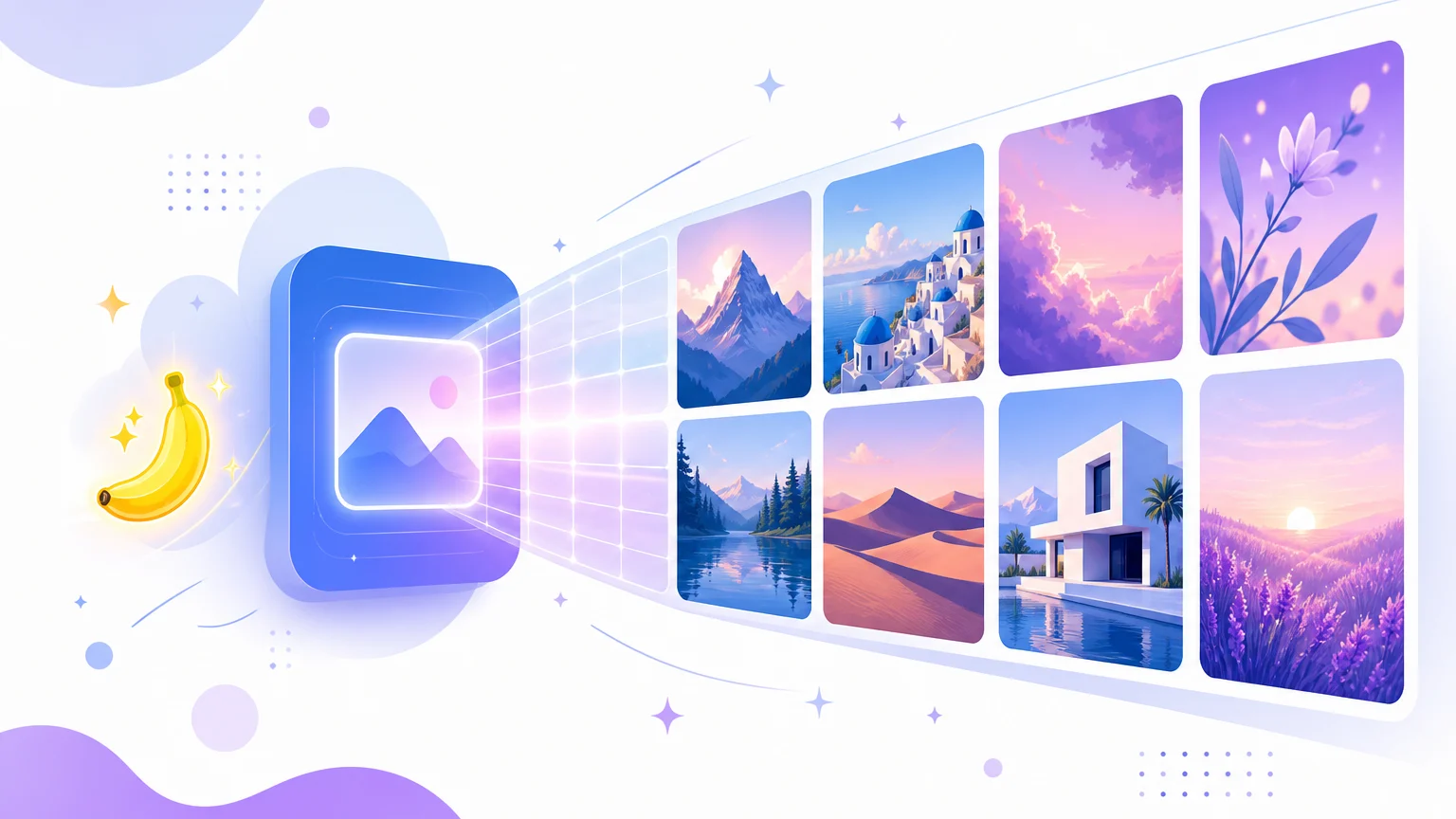
Nano Banana is the code name, become public name, of the model of generation of images of Google DeepMind integrated into Gemini. In concrete terms, you describe an image in natural language anAI creates it, or you import a photo and you modify it with a simple instructions. The most recent version, Nano Banana 2, technically corresponds to Gemini 3.1 Flash Image, released on February 26, 2026. A Pro version (based on the Gemini Image Pro model) targets the most demanding uses.
Its strength: a high realism, an excellent understanding of the instructions, and above all a remarkable consistency when you sequence the modifications on the same image or character. This is what propelled him to the reference rank against Midjourney or FLUX.
Nano Banana or Gemini: what difference?
Frequently asked question, and the answer is simple: Nano Banana is not a separate product. This is the image generation capability inside Gemini, the assistant AI of the Google. When you ask Gemini for an image, Nano Banana works behind the scenes. The name « Nano Banana » means the image model; « Gemini » means the global wizard (text, image, code, etc.) that uses it.
How to access Nano Banana
The simplest way is to go through the Gemini application or website:
- Open Gemini (web, Android or iOS) with an account Google.
- In the input area, choose the image creation option (dedicated icon).
- Describe the desired image, or import a photo to edit, then launch the generation.
- Refine with a new set: Nano Banana keeps the consistency of one version to another.
Developers can also use via Google AI Studio and the Gemini API. For creators, the Gemini app is enough.
Is Nano Banana free?
Yes, in part. Free access to Gemini allows to generate images with Nano Banana, within the limit of a daily quota. Once this quota is reached, you switch to a lighter model or have to wait for reset. For a high volume, access to the most efficient versions (Pro) and extended quotas go through a subscription Google. For personal and casual use, free is largely sufficient.
⚠️ Attention: images generated by Nano Banana include an invisible SynthID watermark. Practical to know if you publish: a image detector AI may identify them as generated by AI.
The model also experienced a public setback. Integrated Google Earth on 30 July 2026, he was withdrawn the next day, after producing false satellite views deemed too credible. We're detailing the withdrawal of Nano Banana 2 from Google Earth and what it reveals today's safeguards.
What Nano Banana Can Do
- Generate Image from a text, in all styles (photo, illustration, 3D...).
- Edit an existing photo by instruction: change a decor, a garment, a color.
- Maintaining a coherent character one image to another, a major asset for visual series.
- Customize : via the Personal Intelligence function, Gemini can tap your photos Google for images in your image, without detailed prompt.
- Compose multiple images in one coherent scene.
Write his quick Nano Banana
The quality of the result depends mainly on the instructions. Some principles that work: describe the subject, style, framing and atmosphere rather than stacking the keywords. Specify the format (portrait, landscape), light and emotion desired. To modify an image, formulate a clear instruction at a time (« replaces the bottom with a beach at sunset ») rather than a tote request. And iterez:AI keep the context, so we refine step by step.
💡 Tip: for a pro visual, add photo terms (« 50 mm lens, soft light, blurred background ») or illustration (« watercolor style, pastel palette »). Nano Banana interprets them very well.
Alternatives and equivalents to Nano Banana
Nano Banana is not alone on the slot. Its direct competitors are Midjourney (artist reference), FLUX (open and realistic) and DALL-E / ChatGPT side OpenAI. Everyone has his strength: Midjourney for style, FLUX for freedom, Nano Banana for consistency and guided edition. For a complete panorama, see our guide of lartificial intelligence photo and our comparison of the generators portraits AI.
Our verdict
🎯 Verdict
Nano Banana is one of the best generators images AI, and the most accessible: free in Gemini, simple, and formidable for guided edition. If you start in the image AI or seek to retouch visuals by instruction, start there. For very artistic styles, Midjourney remains complementary.
To go further: Edit photo with AI, whether an image is generated by AI, and our comparison of the tools of video AI.
FAQ
What is Nano Banana?
It's the generator images of Google integrated into Gemini. It creates and edits images from a description. The Nano Banana 2 version corresponds to Gemini 3.1 Flash Image, released on February 26, 2026.
How to access Nano Banana?
Open Gemini (web or app) with an account Google, choose the creation of images, then describe your image or import a photo to edit. Developers can also go through Google AI Studio and the Gemini API.
Is Nano Banana free?
Yes, with a daily quota in the free Gemini version. Beyond, you switch to a lighter model or wait for reset. Pro versions and extended quotas require subscription Google.
What's the difference between Gemini and Nano Banana?
Gemini is the assistant AI total of Google ; Nano Banana is his model of image generation. When you ask Gemini for an image, Nano Banana produces it.
What is the equivalent of Nano Banana?
Its main counterparts are Midjourney, FLUX and DALL-E (ChatGPT). Nano Banana is distinguished by its consistency and its edition of images guided by instruction.