📌 Essentials
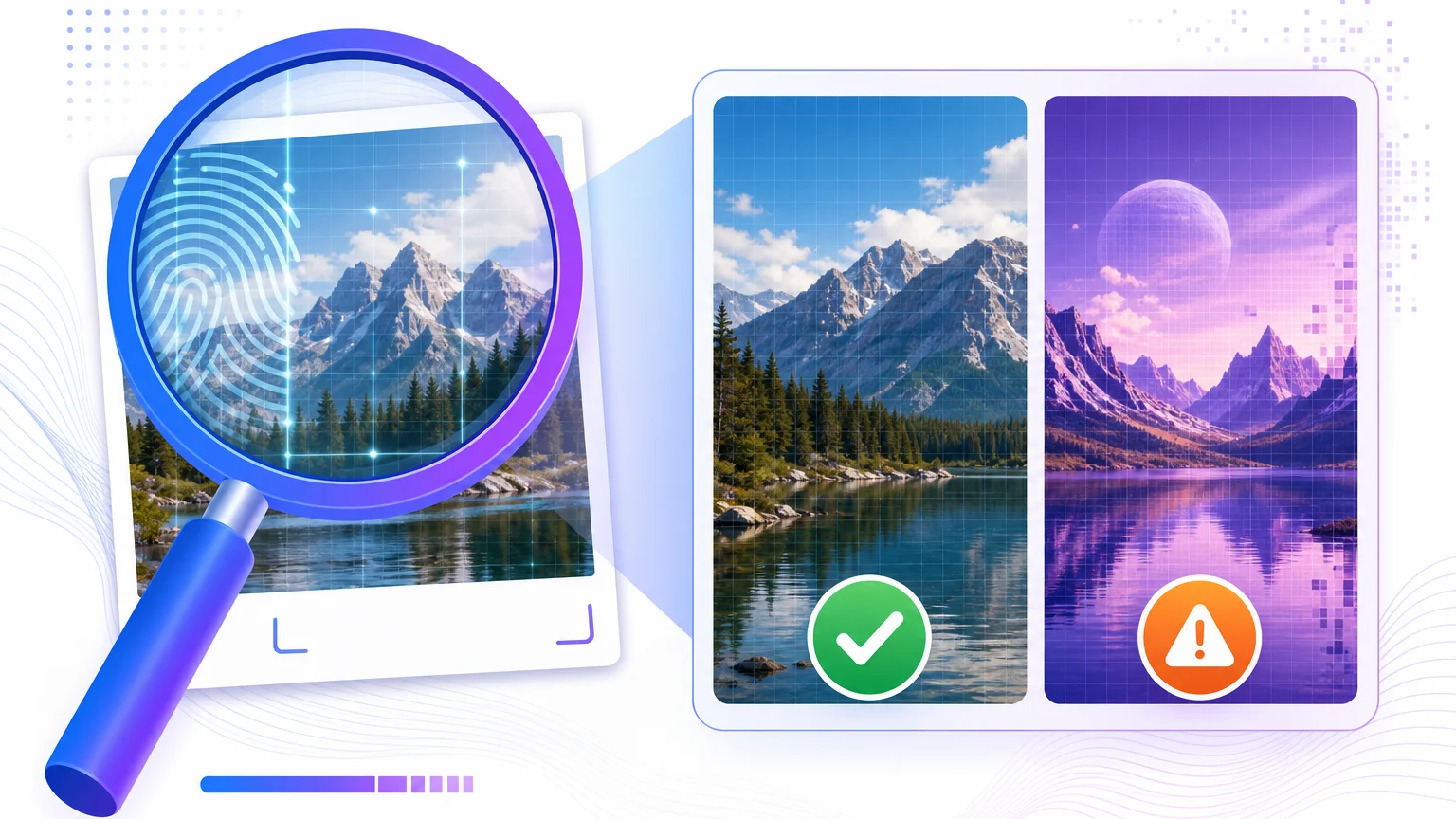
No image detector AI is 100% reliable in 2026. The right method combines four reflexes: an official detector (OpenAI Verify), a multi-model public detector (AI or Not), the reading of metadata (C2PA / SynthID), and your own eye on the details that betray itAI. Taken together, these signals give a reliable response; isolated, they're wrong.
Does an image seem too perfect, or too beautiful to be true? In 2026, distinguish a real photo from an image generated by AI became a real puzzle, even for professionals. Fortunately, tools There are a few simple reflexes to unmask most artificial images. Here's how to know if an image is generated by AI, with the best free detectors and the method that really works.
Contents: Why it became difficult • The best detectors • Recognize with naked eye • SynthID and C2PA • The reliable method • Verdict • FAQ
Why Detect AI Image has become so difficult
The generators like Midjourney, FLUX or the latest models of Google have crossed a course. Classic defects (hands with six fingers, illegible texts, inconsistent reflections) are rare. Result: an image AI recent can be considered authentic in the eyes of a human. The detectors, on the other hand, analyze invisible clues, but they remain bankrupt, especially on a recompressed, cropped or passed image by a screen capture. Hence the interest of crossing several methods rather than relying on a single verdict.
Best image detectors AI free in 2026
OpenAI Verify: the first reflex
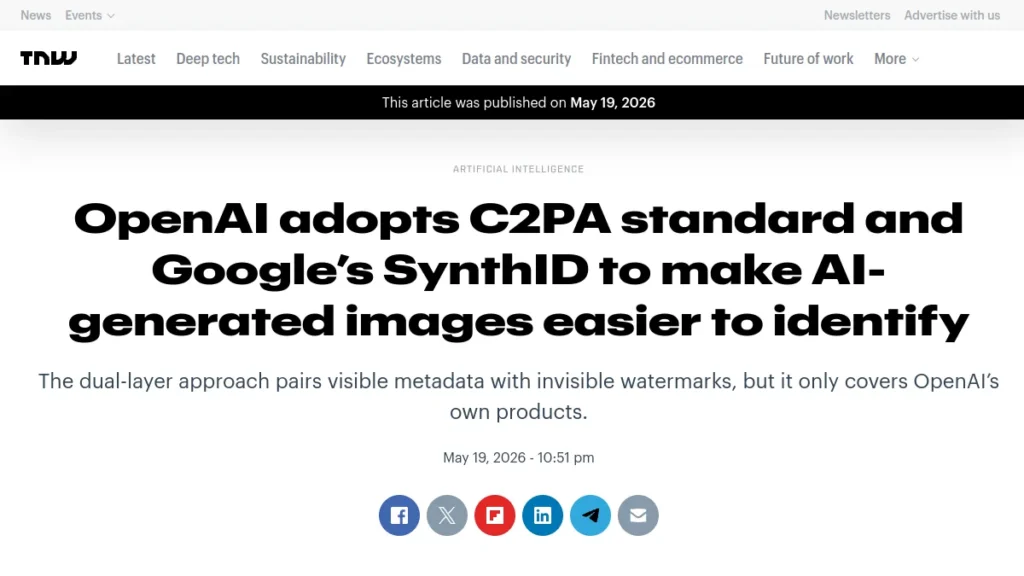
Launched in May 2026, OpenAI Verify istool OfficialOpenAI. It combines the C2PA open standard and the SynthID invisible watermark to confirm the origin of an image. It's the most reliable... on images created with tools OpenAI. For the rest, complete with a generalist detector.
AI or Not: the general public alternative
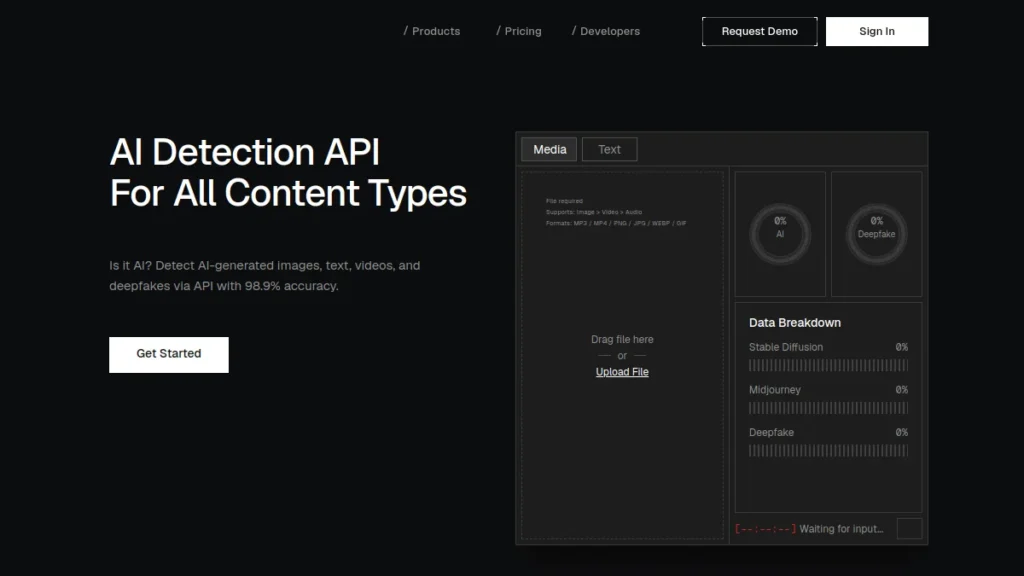
AI or Not gives a verdict in a few seconds: you place the image,tool Announcement « AI » or « Human ». Free for one-time use, it does well on images from Midjourney, FLUX or Stable Diffusion, where Verify remains silent.
Sightengine and Hive: to go further
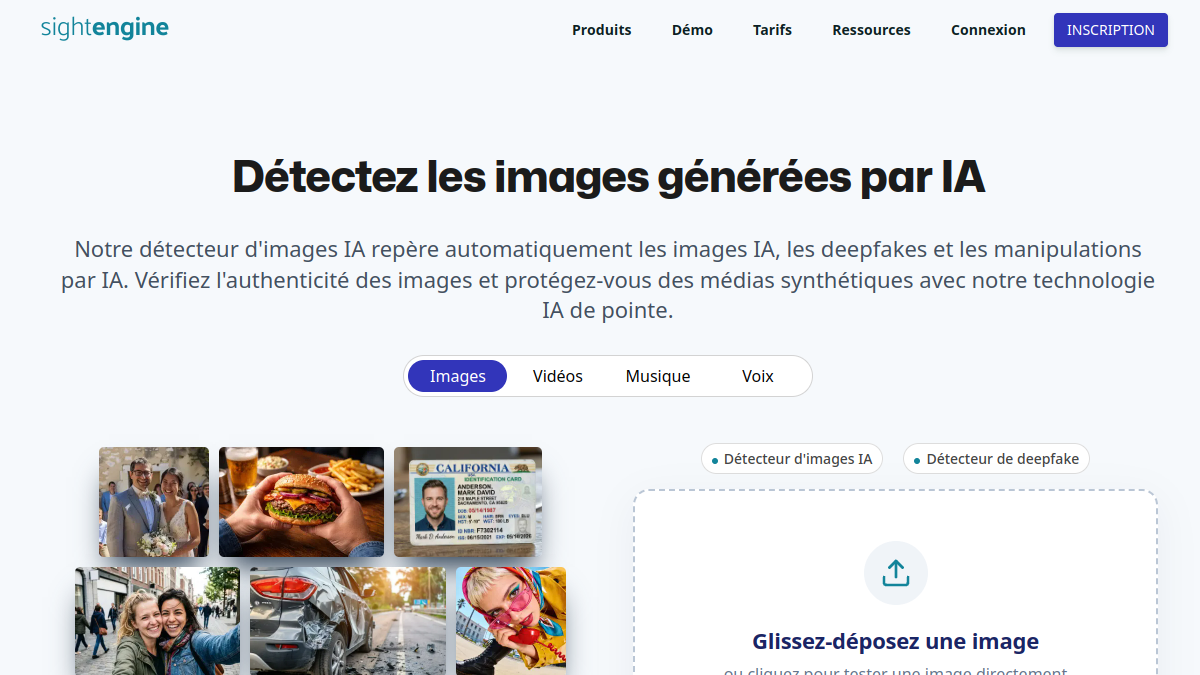
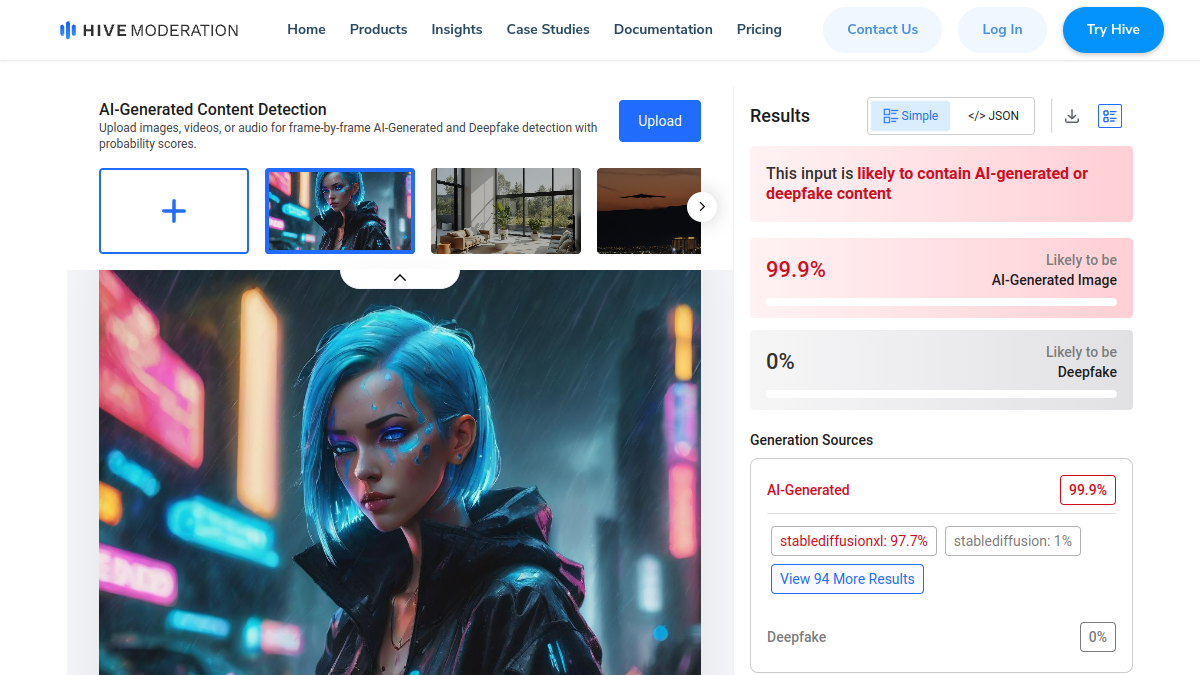
Sightengine offers a comfortable free landing and an API to automate large-scale verification. Hive AI Detector has the advantage of treating in the same tool text, image, video and audio, convenient when checking for various content.
Recognize an image AI With a naked eye
Even before launching a detector, a few details often betray a generated image. To be checked as a matter of priority:
- Hands and fingers : number, length and joints remain the heel of the AchillesAI.
- The text Signs, signs or logos often display distorted or invented letters.
- The reflections and shadows : inconsistencies in mirrors, eyes or direction of light.
- Backgrounds : patterns that are repeated, objects melted together, bank perspectives.
- Skin and hair : sometimes made too smooth, wicks that end in a vacuum.
💡 Tip: an inverted image search (Google Images, TinEye) often reveals if a « photo » There is nowhere else on the web, a common index of a generated image.
A recent episode shows the limit of these watermarks. In July 2026, misleading images were produced since Google Earth when SynthID was active, which led Google to suspend the function in 24 hours. The details can be found in our article on the case Google Earth.
SynthID and C2PA: invisible watermarks
The most reliable detection cannot be seen. SynthIDdeveloped by Google DeepMind, inserts an invisible digital watermark directly into the image generation. For its part, the standard C2PA (Content Credentials) attaches to the image a verifiable history of its creation. More and more generators integrate these markers; when they are present, a tool compatible confirms origin in an instant. The problem: a simple screenshot or recompression can erase them.

The reliable method: combining approaches
None tool alone is not enough. In practice, to decide on a dubious image, follow: OpenAI Verify first (official origin), then AI or Not if Verify detects nothing, a reading of C2PA metadata, and finally a visual inspection of details plus reverse search. If three of these four signals point towards theAINo doubt is allowed anymore. This approach applies as much to checking an image as to understanding how these images are made, a subject that is detailed in our guide onartificial intelligence photo.
Our verdict
🎯 Verdict
For daily use, the duo OpenAI Verify + AI or Not covers most cases, free of charge. But keep in mind that no detector is infallible in 2026: the winning reflex remains to cross detector, metadata and critical eye. MoreAI progress, the more the verification becomes an investigation work.
To go further on the images AI : our guide AI portrait generator, the file Face Swap AI, and analysis of what is legal with deepfakes in France.
FAQ
How to know if an image is generated by AI ?
Pass the image into a detector (OpenAI Verify then AI or Not), check the C2PA/SynthID metadata, inspect the details (hands, text, reflections) and perform a reverse image search. If more than one signal matches, the answer is reliable.
What is the best image detector AI free?
OpenAI Verify for images OpenAIand AI or Not as a free generalist detector. Sightengine and Hive complete well for more advanced or multimodal use.
Image detectors AI Are they reliable?
None reached 100% in 2026. They are mostly mistaken about images recompressed, re-adjusted or captured in screenshot. That is why we must cross several methods rather than relying on a single verdict.
What is SynthID?
SynthID is a technology of Google DeepMind that inserts an invisible digital watermark into images generated by AI. One tool compatible can then confirm their origin, even if the watermark disappears after recompression or screen capture.
What does a photo created by theAI ?
With poorly formed hands and fingers, distorted text on the panels, incoherent reflections and shadows, the background that repeats or melts, and sometimes too smooth skin. These indices are scarce with recent models, hence the usefulness of detectors.
Detection does not stop at photos: videos generated by AI pose the same challenge, with their own clues. If your doubt is about a clip, follow our guide for detect a video generated by AI.