Limage to video AI (or « image-to-video ») makes it possible to transform a static photo into an animated video of a few seconds via theartificial intelligence. In 2026, six tools This market dominates: Google Veo 3.1 (free via AI Studio, top quality), Kling AI 3.0 (human portrait champion), Runway Gen-4.5 (maximum creative control), Luma Dream Machine (organic movement), Pika 2.5 (social) and Seedance 2.0 (the most generous in free).
📌 Essentials
- Image to video AI = Animate a photo static video clip from 5 to 10 s via text prompt.
- Best free : Google Veo 3.1 via AI Studio, without watermark.
- Best for portraits Kling AI 3.0, ultra-realist human movement.
- Best for pros : Runway Gen-4.5, motion brush, image by image camera control.
- Typical duration 5 to 10 seconds per clip generated in 2026.
- Rates : from 0 €/month (free third) up to 95 €/month (Runway Unlimited).
Want to liven up your photos right now? Start with DeeVid AI In less than 2 minutes.
Contents: What is it? • Top 6 tools 2026 • Tutorial step by step • What kind of image works • The prompt motion • To go further • FAQ
What is the image to video AI?
One generator image to AI video takes two entries: one source image (your photo) and one prompt text which describes the desired movement. The model then generates a video clip that animates this image respecting the composition, colors and elements present. This is the most accessible subcategory of the AI video because we're leaving a concrete visual instead of generating everything from zero.
How it works technically
The modeAI breaks down your image into several « layers » (first plane, background, subjects, sky, etc.) then apply a field of movement to each layer, image by image. Over 5 to 10 seconds, at 24 or 30 frames per second, this represents 120 to 300 frames to generate. The challenge: temporal coherence, an object must not change shape or disappear between two frames, and physics must remain credible.
It was this temporal consistency that made the difference in 2024-2026. In 2023, the first models still produced visible artifacts (hands with six fingers, faces that deform, objects that flash). Today, Veo 3.1, Kling 3.0 and Runway Gen-4.5 produce photorealistic clips over 10 seconds without manifest deformation.
Most common use cases in 2026
- E-commerce, animate her product photos for Meta commercials, TikTok, YouTube Short. Immediate ROI on click rates.
- Real estate, give movement to a photo of real estate (simulated drone, parallax effects).
- Portraits and talking photos, do « Talk » a profile photo, animating a frozen face. Kling and BIGGU are kings on this niche.
- Family photos / souvenirs, personal use to bring old photos to life.
- Artistic marketing, animation of album visuals, covers, editorial illustrations.
- Reels and TikTokscreate fast content from static visuals without turning.
💡 Difference with text to video: in image-to-video, you start from an existing image (so the composition and style are fixed). In text-to-video, everything is generated from zero from the prompt. For a text-to-video step by step, see our tuto AI video in 10 minutes. The image-to-video offers more visual consistency with a brand or graphic charter.
Top 6 tools image to AI video in 2026
Of the 15 generators six were actually released in May 2026. This is our cross-test selection.
| Tool | Freetier | Specialty | Ideal for |
|---|---|---|---|
| Google Veo 3.1 | ✅ AI Studio, no watermark | Overall quality, native audio | All uses, free start |
| Kling AI 3.0 | ✅ Daily credits | Human, physical movement | Portraits, animation of people |
| Runway Gen-4.5 | ⚠️ 125 life credits | Motion brush, pro control | Agencies, deliverable customers |
| Luma Dream Machine | ✅ 30/month in 720p | Organic movement, cinema | Landscapes, kinematic plans |
| Pika 2.5 | ✅ 150 credits/month | Pikaframes, social format | Reels, TikTok, vertical formats |
| Deevid AI | ✅ Freemium | Product animation, interface EN | E-commerce, marketers EN |
Our recommendation by profile:
- You start → Google Veo 3.1 via AI Studio (free, no watermark, top quality)
- You're animating portraits → Kling AI 3.0 (most credible human movement)
- You publish in pro → Runway Gen-4.5 (motion brush + camera control)
- You do e-commerce EN → Deevid AI (French interface, dedicated product animation)
- You post daily on Reels/TikTok → Pika 2.5 (native vertical formats)
Our recommendation for e-commerce EN
Animate your product photos in video in less than 2 minutes
DeeVid AI offers a 100% French interface, a dedicated image-to-video mode for e-commerce visuals, and an immediate free plan. 100 credits offered for registration, without credit card.
No commitment · No credit card required
For review detailed tool by tool, see our comparison Top 10 AI Software video and our top of AI Tools free video 2026.
Tutorial step by step: animate a photo in 5 minutes with Google Veo 3.1
We take the most profitable option: Veo 3.1 via Google AI Studio. Free, watermarkless, 1080p quality. Five steps, about 5 minutes.
Step 1: Prepare your image
The source image must be clean and well composed. JPG or PNG format, minimum resolution 1024 × 1024 px, ideally 1920 × 1080 if you target HD. Avoid extreme compressed images (visible JPEG artifacts), the model will amplify defects in animation.
Also avoid images containing text: templates struggle to keep letters stable on multiple frames. If your visual has a logo or slogan, add it in post-production after animation.
Step 2: Access to Google AI Studio
See you on aistudio.Google.com, log in with an account Google, then select the model Veo 3.1 in the selector at the top right. Choose Mode Image to Video (not Text to Video).
Step 3: Upload your source image
Click on the upload icon, select your file. The image appears in preview. AI Studio automatically detects the format (landscape 16:9, portrait 9:16, square 1:1) and adapts the rendering.
Step 4: Write the prompt motion
That's the part that changes everything. You no longer describe the subject (it is already in the image) but the expected movement. Example on a beach photo at sunset:

« Gentle waves rolling onto the beach, soft warm breake moving the palm leaves lightly, sun slowly turning towards the horizon, slow cinematic drone tracking shot moving forward, golden hour atmosphere light, subtle birds flying across the sky in the background. »
Five components: a main movement (waves), a secondary movement (palms + sun), a camera movement (drone tracking), a light (golden hour), a detail living in the background (birds). That's enough for 5-8 seconds.
Step 5: Generate and Download
Click Generate. 30 seconds to 2 minutes later, the clip appears with its audio (Veo 3.1 automatically adds a coherent sound atmosphere). Download in MP4 1080p, no watermark Google.
⚠️ If the result is not good at first sight: Don't reformulate everything. Repeat 2-3 times the same query (results vary with each generation). If always disappointing, simplify the prompt: one main movement, no cumulation. And check that your source image does not itself have defects that spread.
What types of images work best?
Not all visuals are valid for a ai image generator video oriented. Six categories that give excellent results, and three to avoid.
Images that work very well
- Natural landscapes (sea, mountain, forest, sky), excellent models on water, wind, clouds.
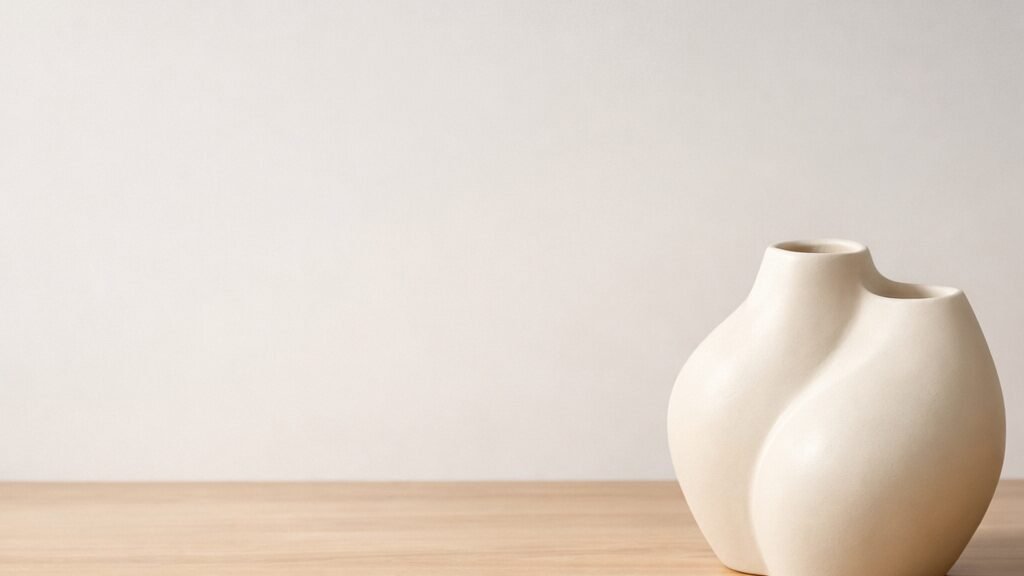
- Product photos on neutral background, rotating animations, zoom, gliding light.
- Close squared portraits (Kling AI especially), head micro-movements, blinking, smiles.
- Urban scenes, traffic, background passers-by, neon flashing.
- 2D illustrations and concept art, parallax effects, simulated camera movements.
- High resolution photos with good depth of field, foreground / background separation facilitates layer decomposition.
Images to avoid
- Very close multiple faces, risk of fusion or deformation between faces.
- Text embedded in the image, almost systematic instability. Make the text in post-production.
- Very compressed or pixelized images, the defects simmer in the final video.
How to write a good quick motion
A quick image-to-video differs from a quick text-to-video: you no longer describe a scene (it already exists in the image), you describe only movement to be applied. Three principles.
1. One main action, not ten
On an 8-second clip, the model pains beyond 2-3 simultaneous movements. Select a dominant movement (« the waves roll forward ») and 1 or 2 secondary (« palm leaves sway Gently »). Don't try to animate everything.
2. Specify camera movement
Without precision, the model often leaves the camera static, flat result. Specify: « slow drone tracking shot moving forward », « gentleman camera push-in », « light zoom out », « subtle parallax effect ». This is what gives the « movement » overall.
3. Give duration and rhythm
« Slow », « Good », « Subtle » → slow and contemplative movement. « Dynamic », « fast », « energetic » → Quick movement for a social format. These adverbs change the perceived tempo, even with the same duration.
Four prompts ready to copy
Landscape photo:
« Gentle parallax effect, slow camera push-in, soft mist drifting from left to right, leaves moving lightly in the breake, ambient golden hour light, cinematic atmosphere. »
Product photo (e-commerce):
« Slow 360-degree rotation of the product on a smooth turntable, soft studio lighting glides across the surface, subtle reflections catching the light, clean product video aesthetic. »
Portrait:
« Subject links slowly and give a soft smile, hair moves nicely from a light breathe, light tilt of the head, cinematic slow step of field maintained. »
Urban scene:
« Cars drive slowly along the street, neon signs flicker in the background, a few pedalrians cross naturally, light handheld camera shake, evening atmosphere withrain reflections. »
To go further: voice-over, subtitles, editing
A raw animated clip rarely serves as a finished product. Three supplements to make it public.
Voice-Over and Audio
ElevenLabs remains the reference in 2026 on voice synthesis: 30+ natural French voices, voice cloning, free plan sufficient for personal projects. Veo 3.1 already adds an ambient soundtrack, but for an off-narrative voice, ElevenLabs Better.
Dynamic subtitles
For vertical formats (Reels, TikTok), animated subtitles boost retention. Submagic istool the fastest: upload + auto generation in 30 seconds. Detail in our Complete Guide on the generation of subtitles AI.
Concate multiple clips
An 8 seconds clip is not enough for a 30 seconds Reel. Generate 4 clips from 4 different images, assemble them with Filmora or CapCut. Our comparison of the AI Tools for editing covers the best options in 2026.
🎬 Assemble your clips AI
Transform 4 clips AI in a video of 30 seconds
Filmora 14 includes a multitrack editor, transitions AI 4K direct to YouTube, TikTok or Reels. Free version without time limit to test.
Windows · Mac · iOS · Android
Upscaling output
If your clip comes out in 720p and you want 4K, tools Dedicated (ai image upscaler applied frame by frame, or upscalers video like Topaz AI Video or HitPaw VikPea (partner link)) allow to mount resolution without losing quality. Useful especially for pro projects for TV or cinema.
FAQ: Everything about the image to video AI
What is a generator image to video AI?
It's a tool da general image which turns a static photo into an animated video clip of a few seconds. You provide the source image and a text prompt describing the desired movement. The model then generates a video respecting the original composition. This is a subcategory of the video AI, distinct from text-to-video (where everything is created from zero).
What's the best generator free video image in 2026?
Google AI Studio with Veo 3.1 is today the best free ai image generator video oriented: 1080p quality, native audio, no watermark, free access via an account Google. Seedance ByteDance 2.0 is also very generous in free credits but access from Europe is sometimes capricious. Kling AI offers daily credits, ideal for portraits.
What is the maximum duration of a video generated from an image?
In May 2026, most models cap 5 to 10 seconds per clip in image-to-video. Kling 3.0 climbs up to 10 s, Veo 3.1 to 8 s, Pika to 5 s by default (extensible via Pikaframes). For longer videos, you need to generate multiple clips from multiple images and assemble them into a publisher. Our tuto AI video details the full workflow.
What types of images can one animate with AI ?
Photographs (landscapes, portraits, products, urban scenes), 2D illustrations, concept art, screenshots, screenshots. The best results come from high resolution images with good depth of field. Avoid images containing a lot of text (instability) and highly loaded compositions (the model struggles to isolate subjects).
Can we use these videos for commercial use?
Veo 3.1 via Google AI Studio allows commercial use even on the free tier. Pika and Runway impose paying. Kling and Luma allow commercial use on their paid plans. Always check the conditions of use before monetizing a clip, and do not animate a photo of a real person without his or her explicit consent (right to image problem which adds to the conditions of the tools).
Do you need to know how to edit videos to use the image to video AI?
No editing skills required to generate the clip itself: everything is done quickly in natural language. But if you want to assemble several clips, add a voice-over or subtitles, you will need a basic editor (CapCut, Filmora, DaVinci Resolve free). Our guide of the AI Tools for editing details the options.
🎯 Verdict
Limage to video AI became the fastest way to create video content without shooting in 2026. Google Veo 3.1 (via AI Studio) is the preferred option to start, free, watermark-free, cinema quality. Kling 3.0 dominates human portraits, Runway Gen-4.5 on fine creative control.
The key to quality: a clean source image + one prompt targeted motion (1 main movement, 1-2 secondary, one camera movement). Italize 2-3 times until the right result, intergenerational variability remains high.
Once comfortable, expand your workflow: combine image-to-video with text-to-video (see our tuto AI video in 10 minutes), explore the detailed comparisons on our Classification AI 2026, or attack profitability with our workflow chain YouTube faceless.