In mid-July 2026, YouTube rewritten the page that explains to creators why a channel can lose its monetization. Three categories of content are now described in black and white, and one of them explicitly refers to videos produced in series withAI. The French press took over the news on 20 and 21 July, often under the title « YouTube Demonstrates AI videos ». This shortcut is not true, and it is worth understanding why: YouTube changed, that's its wording, not its rules.
Contents: What has been updated · The three categories covered · Why is this not a ban? · What it changes for your channel · Five concrete adjustments · The direction taken by YouTube · FAQ
📌 Essentials
- The rules have not changed. YouTube clarified the drafting of its policy on « contents not authentic »which already existed.
- Three categories are now explicitly described: generic or repetitive content, content designed to manipulate emotionally, and personas AI presenting themselves as experts on sensitive topics.
- LAI is not prohibited and never was. What blocks monetization is the production in series without the creator's own input.
- The decisive criterion is nottool used but what you add: perspective, research, structure, editorial voice.
What YouTube updated in mid-July 2026
The policy concerned is called the « contents not authentic » (inauthentic content). It is part of the rules governing the monetization of YouTube Partner Program. Its history is useful to know, because it explains the current confusion.
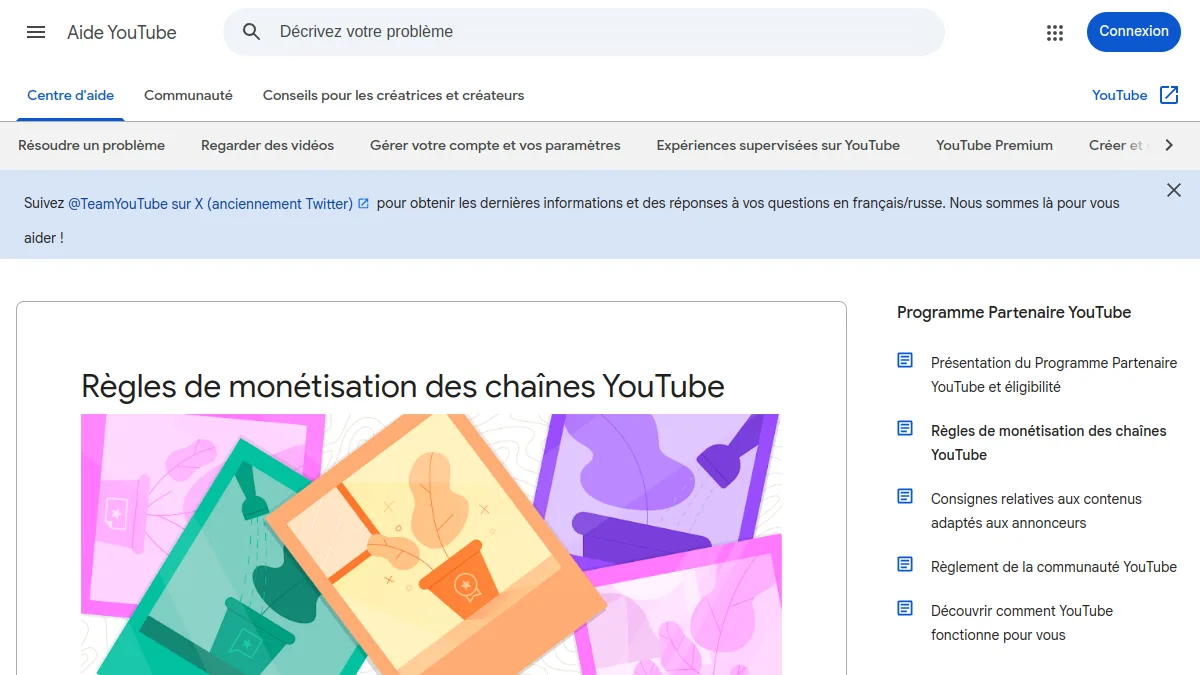
In July 2025, YouTube had already renamed this rule. She used to be called « repetitive content » (Repetitive content), a formula that many creators understood wrongly: it was believed that it was a matter of republishing the same video several times. The new name was intended to include mass production as well. Again, the background rule had not moved one inch: YouTube never monetized the content produced to the chain without added value.
A year later, mid-July 2026, YouTube takes the same page and finally details what this concept covers. The important point, stressed also by TechCrunch that by the specialized press creators, it is that no new motive for demonisation was created. Chains that respected the rules before continue to respect them. What changes is that those who did not respect them can no longer say that they did not know.
The trust and security manager of the platform, Matt Halprin, summarizes the spirit of the approach in the columns of TechCrunch: the same technology allows to create excellent things and also feeds a form of industrial exploitation of content. The whole policy stands in this gap.
The three categories of non-monetizable content
This is the real novelty of this update. So far, the page was vague. She now describes three distinct families.
1. Generic or repetitive content
This is the category most directly concerned with creators who work with AI. YouTube It puts videos of low educational value, with little or no own commentary, and especially those that barely vary from one episode to another on the same channel. The examples quoted are spoken: characters placed again and again in the same situation with the same exit, slideshows of images, narrative frames out of the same template.
The wording which refers toAI is precise. It talks about content generated by AI from generic or non-original models, giving the impression of mass production, without the creator adding his eyes or his authentic perspective. Every piece of this sentence counts, and we come back below.
2. The content unpleasant or disturbing
This category does not speak ofAI, but it affects many industrialized formats. YouTube describes content that relies heavily on emotionally manipulative formulae, mimics existing formats to the point of becoming interchangeable, or seems designed solely to shock to make views.
The school case often cited: videos of animals put in distress then rescued, a format that exploded and part of which is made of all parts. If you produce Shorts calibrated for emotion at any cost, it is this line that needs to be read again.
3. People AI presenting themselves as experts
The third category is the sharpest, and it is also the easiest to respect. It covers any content that presents itself as a human expert providing advice on health, law, finance or politics, while it is an avatar or a generated voice.
⚠️ Attention: on this third category, YouTube indicates that channels that publish such content will not be allowed to monetize. The penalty is on the channel, not just on the video. If you use an avatar AI to talk about personal health or finances, this is the priority to be corrected.
No, YouTube did not demonize the videos AI
It must be made clear, because several articles published this week say the opposite. YouTube does not prohibitAI, does not dismantle videos because they are generated, and did not add any restrictions onAI as such.
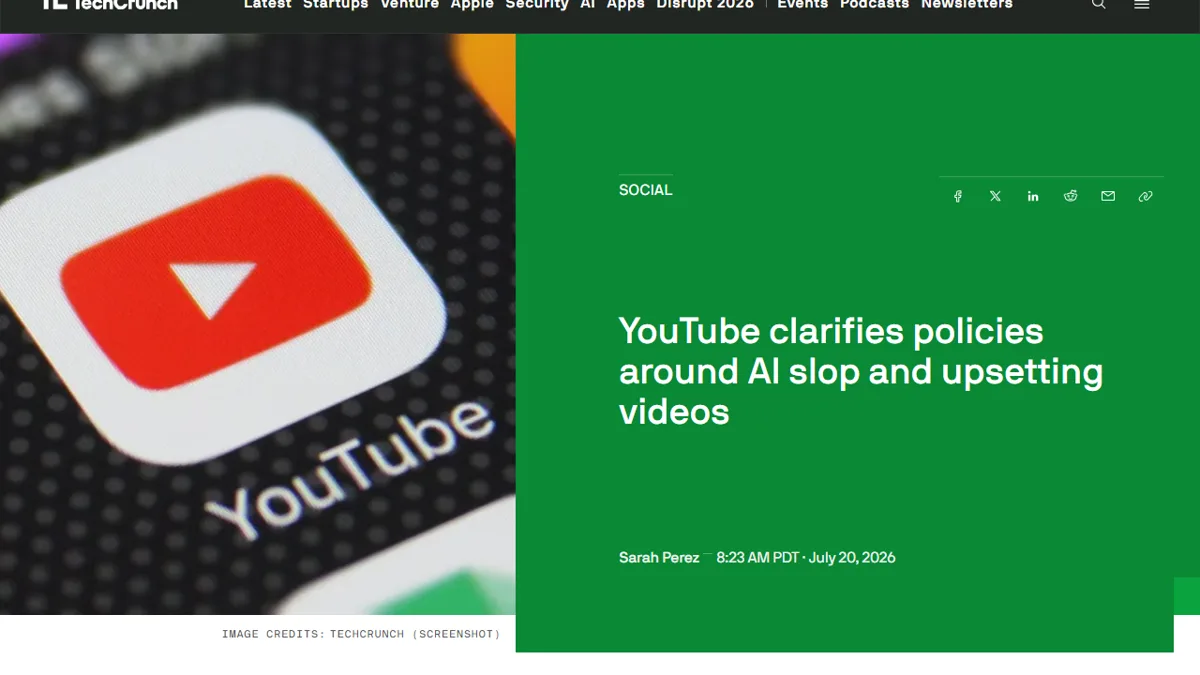
The official page is explicit on the subject: tools AI remains acceptable if the result translates the creator's own vision, for example to give life to a character or a narrative that he himself imagined. The distinction does not relate totoolIt is about the originality and authenticity of what comes out.
Two other points have remained unchanged and deserve to be recalled, because they also go wrong. The thresholds for access to the partner programme did not change. And the reused content is not targeted by this update: republish on YouTube a video from another platform remains eligible for monetisation.
What it really changes for your channel
If the rules have not changed, why do you care? Because an explicit policy is applied differently than a vague policy. When the criteria are written, they become opposable, and moderation teams like automated systems have a clearer grid. Here are the three most concerned profiles.
Faceless chains
It is the most exposed format, and we must be honest about it. A faceless channel is not targeted as such: nothing in politics mentions the absence of face. What is targeted is the mode of production that often accompanies this format, i.e. a unique template in dozens of almost identical videos.
The dividing line is clear. A faceless chain that digs a subject, brings research, builds an angle and makes a position sound without problems. A faceless chain that stacks videos from the same model with the same structure and structure voiceover falls into the first category. If you go on this format, our Complete Guide chain YouTube cost-effective details the workflow, and this July 2026 update makes the editorial part more critical than ever.
Shorts produced in volume
The short format is structurally repetitive, it is its nature. The risk is therefore not the repetition of a format, that YouTube accept, but lack of background variation. The official page also states that similar formats remain acceptable when episodes have separate intrigues, themes or concepts.
In other words, publishing thirty Shorts a month is not a problem. Publish thirty Shorts that tell the same thing with the same frame is one. If you use tools generation for this format, our comparison of the best AI to create YouTube Shorts remains valid, provided that the exit from thetool as a starting point and not as the finished product.
The voiceover and music generated
One voiceover There is no problem with monetization per se. None of the three categories mention voice synthesis. The subject becomes sensitive only in one specific case, that of the third category: a generated voice that presents itself as a human expert on health, law, finance or politics.
Background music is another common dead spot. A track created with a AI generator free is not necessarily allowed on a monetized channel: this is the case of Mubert, whose Free plan excludes any monetisation (see our point on Mubert free and YouTube).
Monetization also depends on very ground-to-earth details, like publishing each video in the native format of the platform rather than an approximate cropping. For dimensions, ratios and up-to-date durations, a summary of the video formats of social networks.
Five concrete adjustments to remain monetizable
Nothing here is spectacular. These are production settings, and most also improve retention.
- Break the template. If your last ten videos have the same opening structure, the same cutting and the same fall, change into three. This is the most legible production signal in series.
- Add a layer as ltool does not produce. A verified data, an experienced example, a comparison, an assumed disagreement with a received idea. This is exactly what politics calls the creative perspective.
- Remove expert avatars from sensitive subjects. Health, law, finance, politics. On these four themes, a generated human presenter puts the entire chain at risk.
- Check your miniatures and hooks. The second category refers to formulas designed to shock or manipulate. A miniature that promises more than video falls within this logic.
- Use the synthetic content declaration box. It is planned in YouTube Studio for realistic generated or modified content. It costs nothing and plays in your favor in case of control.
💡 Tip: the simplest test to know if a video passes: ask yourself what it contains that another channel in the same slot could not generate in three minutes with the same prompt. If the answer is « Nothing », it is the content that needs to be reworked, nottool We have to change.
These adjustments do not call into question the interest of tools generation. They simply move effort: less time on manufacturing, more time on the angle and writing. To choose tools adapted to this type of production, our comparison of the AI to create videos YouTube reviews the solutions according to the level of control they leave to the creator, which becomes the central criterion with this update.
YouTube is not alone to tighten. A few days later, Snap announced that videos fully generated by AI would no longer be recommended on Spotlight, with the same logic: do not prohibit production, but cut distribution.
This monetization rule does not say anything about ownership of the videos themselves. Who owns the rights in a generated sequence, and can another chain be prevented from taking it back? We took a legal look in our article on the videos generated by AI and copyright in France.
To put these rules in context, we have gathered the verified figures of the sector (uses, market, Kling, Veo, end of Sora) in our page statistics AI video in 2026, each number with its source of origin.
To put these rules into practice on a daily basis, the tools which serve at each stage of a chain, ideas to Shorts, in a guide dedicated: I AI for YouTubeur, step by step, with what they really cost.
What it says about the direction taken by YouTube
This clarification does not happen alone. It is part of a broader movement where platforms seek to distinguish what is manufactured from what is worked. In the same week, TikTok presented its deepfakes detection technology and NVIDIA unveiled to SIGGRAPH a synthetic video detector for editors.
The movement goes beyond the platforms: from 2 August 2026, the European regulation imposes its own mention on the content generated by AI. If you monetize, you are concerned on both sides: what you need to report on your videos AI and what the tools Do it already for you.
The common point of these announcements is not the fight againstAI. It is the search for a way to qualify what is circulating. YouTube does not seek to know whether a video has been generated, a question which the platform would find difficult to answer on a large scale. She's trying to figure out if a chain brings anything. This is a more technically defensible and editorially demanding position.
For a creator who works seriously with these tools, this orientation is rather good news. Sorting is done on the bottom, not on the manufacturing method. But the border between « declined » and « original » and that this is YouTube who appreciates it.
Frequently Asked Questions
YouTube Will he monetize the videos generated by theAI ?
Yeah, and he never stopped doing it. No rule excludes monetization of a video on the ground that it was generated. What blocks monetization is the generic character and produces content in series, regardless of the technology used. A generated video that carries a clean angle and work remains eligible.
YouTube does it sanction the content generated by theAI ?
No, not as part of their generation. The non-authentic content policy punishes three things: generic or repetitive content without input from the creator, content designed to manipulate emotionally, and personas AI presenting themselves as experts on sensitive topics. Content generated that escapes these three cases is not sanctioned.
The AI Voice can she be monetized on YouTube 2026?
Yes. Voice synthesis does not appear in any of the three non-monetizable categories. The only problematic case is a generated voice that gives itself to a human expert on health, law, finance or politics. One voiceover synthetic on entertainment, news or content tutorial It's no problem.
Can a faceless chain still be monetized?
Yes. The faceless format is mentioned nowhere in politics. What counts is the mode of production: a faceless chain whose videos are declined from the same template without change of background falls under the first category, while a faceless chain that builds separate subjects with a clean angle remains perfectly eligible.
Does it have to be said that a video was generated by AI ?
YouTube Studio offers a declaration box for realistic content generated or modified synthetically. This declaration is subject to a duty of transparency separate from the rules of monetisation: the check-check does not lead to demonisation, and it protects the chain in case of control.
Does this update change the thresholds of the partner program?
No. Conditions for access to YouTube Partner Program in number of subscribers and viewing hours are unchanged. The July 2026 update only covers the description of content that cannot be monetized once the channel is allowed.
🎯 Verdict
This update does not deserve panic or indifference. It creates no new rules and threatens no chain that works its subjects, including with tools generation. On the other hand, it writes what was previously implicit, and makes a precise model much more fragile: that of the chain mounted on a single template, duplicated by the dozen, without anything belonging to the creator. If this is your case, the adjustment to be made is editorial before being technical.